
Viking Spear for Sale – Handmade Damascus Viking Swords, Axes & Spears Guide
October 27, 2026 · Lycan Handmade Style
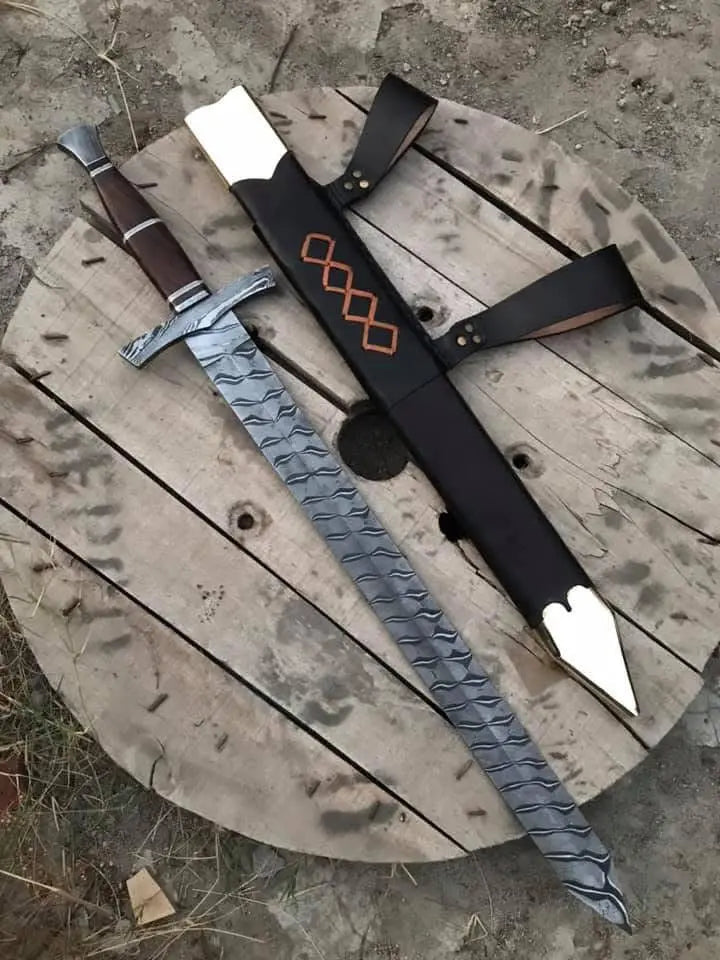
Few things capture the spirit of the Norse world like a real forged blade. If you are looking for a Viking spear for sale, a handmade Damascus Viking sword, or a matching hand-forged Viking axe or dagger, this guide covers every piece in our Viking swords collection and hand forged axes collection. Whether you collect medieval weapons, practise reenactment, or want a powerful display piece for your wall, here is how to choose the right one.

A Short History of the Viking Sword
During the Viking Age (roughly the late 8th to mid 11th century), a sword was one of the most valuable things a Norse warrior could own. Typical Viking-era swords were single-handed, double-edged and around a metre long, with a fuller — a groove down the blade — to make it lighter without losing strength. Early swords were often pattern welded, a technique where bars of iron and steel were twisted and forged together. That technique is the ancestor of the layered patterns you see in modern Damascus steel, which is why a Damascus Viking sword feels so historically fitting.
Best Handmade Damascus Viking Swords for Sale
1. Damascus Steel Viking Sword with Leather Sheath & Baldric
Our signature piece. The Damascus Viking sword with leather sheath and baldric comes ready to wear, with a shoulder baldric for authentic carry at events and reenactments.
2. Damascus Viking Sword with Wood & Black Micarta Handle and Scabbard
Micarta adds grip and durability to a traditional wooden handle. The Viking sword with micarta handle and scabbard is a great choice if you want a sword that is handled, not just hung.

3. Damascus Steel Sword with Damascus Guard & Pommel
Full Damascus fittings make this one special. The Damascus sword with Damascus guard and pommel shows pattern on the blade, guard and pommel — a true collector's sword.
4. Damascus Steel Viking Short Sword with Leather Sheath
Shorter blades were common in the Norse world, and the seax was a famous everyday weapon and tool. Our Damascus Viking short sword is easier to display, easier to handle and perfect for smaller collections.
5. Red Fantasy Sword with Sheath – Medieval Cosplay Longsword
Not every buyer wants strict history. The black and red fantasy longsword is a bold medieval sword replica for cosplay, display and fantasy collectors.
Viking Sword Comparison
| Sword | Best for | Carry | From |
|---|---|---|---|
| Viking sword with baldric | Reenactment, authentic look | Sheath + baldric | $300 |
| Micarta handle Viking sword | Handling and grip | Scabbard | $350 |
| Damascus guard & pommel sword | Collectors | Hand-stitched sheath | $299 |
| Viking short sword | Display, smaller collections | Hand-stitched sheath | $549.99 |
| Red fantasy longsword | Cosplay, fantasy display | Sheath | $400 |
Hand Forged Viking Axe for Sale
The axe was the most common Norse weapon — cheaper than a sword, and just as useful on the farm as in battle. Our hand forged axes carry that same dual spirit.
Viking Axe with Hand-Engraved Carbon Steel Head & Viking Runes
This is the centerpiece of the collection. The hand engraved Viking axe with runes and Damascus top piece features a carbon steel head engraved with Norse runes and an emblem, a wood handle with leather wrap and brass pins, and a fitted leather cover for the head.

Handmade Tomahawk Axe with Spike
For bushcraft and camp use, the full tang tomahawk axe with spike is a compact, hand-forged hatchet that handles kindling, camp chores and throwing practice.

Handmade Viking Spear for Sale
The spear was arguably the most important weapon of the Viking Age — the first weapon most warriors carried, and the one associated with Odin himself through his spear Gungnir. Our hand forged Viking spear with Celtic and skull engraving uses a carbon steel head on a traditional ash wood shaft, with a leather sheath to protect the point.

Why Viking Spears Were the Warrior's First Choice
Viking spears were cheaper to make than swords, needed far less iron and gave a fighter valuable reach. They were used for thrusting from behind a shield wall, for throwing, and for hunting, which is why archaeologists find many more spearheads than swords from this period. A sword showed wealth; a spear was the weapon almost every free man could own.
Blade Length and Overall Length: What to Check Before You Buy
Historical spearheads came in many shapes, from narrow armour-piercing points to broad leaf-shaped heads, and their size varied widely — from a hand span on light throwing spears to well over a foot on heavy thrusting spears. Shafts were usually ash, just like ours, and a complete Viking spear often stood taller than the warrior carrying it. When you compare any Viking spear for sale, check three things: the blade length of the head, the overall length with the shaft fitted, and how securely the socket is pinned to the wood. The exact measurements of our spear are listed on its product page.
Viking Spear vs Viking Sword: Which Should You Buy?
A Viking sword is the classic centerpiece for a wall display, while a Viking spear makes a taller, more dramatic statement in a corner, above a fireplace or on a weapon rack. The spear is also the more historically common weapon, so it adds authenticity to any Norse collection. Many of our customers start with a sword and add a spear to complete the set.
Complete the Set: Viking-Style Knives & Daggers
A Norse collection is not complete without a blade for the belt. Pair your sword or axe with:
- Viking Celtic engraved skinner knife with rosewood handle
- Celtic Viking engraved knife with wenge wood handle
- Celtic Viking engraved knife with white bone handle
- Double edge dagger with brass fittings and wrapped handle — see the full dagger collection
Anatomy of a Viking Sword: Know What You Are Buying
Understanding the parts of a sword makes it much easier to compare a Viking sword with leather sheath from one maker to another:
| Part | What it is | What to look for |
|---|---|---|
| Blade | The double-edged cutting section | Even grind, clean Damascus pattern, no cracks or forging flaws |
| Fuller | Groove running down the blade | Straight and centred — it lightens the sword without weakening it |
| Guard (cross) | Short bar between blade and grip | Tight fit with no wobble; Damascus guards add value |
| Grip | The handle you hold | Wood, leather or micarta that feels secure in the hand |
| Pommel | The heavy cap at the end of the grip | Balances the sword and locks the tang in place |
| Tang | Steel that runs through the grip | A full or through tang is far stronger than a welded-on "rat tail" |
| Scabbard / sheath | Protective cover for the blade | Snug fit; a baldric or belt loop for carry |
Viking Sword vs Medieval Longsword: What Is the Difference?
People often search for "Viking sword" and "medieval sword" as if they are the same thing, but they come from different eras. A Viking sword is a one-handed blade made to be used with a round shield, usually with a short guard and a lobed or rounded pommel. The later medieval longsword is longer, has a longer grip for two hands, and a wider crossguard. If you want an authentic Norse look, choose one of our Viking swords. If you want a dramatic fantasy-style display piece, the red fantasy longsword fits better.
Who Buys Handmade Viking Weapons?
- Collectors building a Norse or medieval weapon wall.
- Reenactors and LARP fans who want a real forged piece for display at events.
- Fans of Viking history and TV dramas who want something more authentic than a mass-produced replica.
- Gift buyers looking for a once-in-a-lifetime present for a retirement, milestone birthday or groomsman.
How to Choose a Viking Sword
- Display or handling? For wall display, focus on pattern and fittings. For handling and reenactment, prioritise grip and a proper scabbard or baldric.
- Length. A full sword makes a dramatic statement; a short sword or seax fits smaller spaces.
- Fittings. Damascus guards and pommels add value and visual impact.
- Carry system. A baldric gives the most authentic look for events.
- Check your local laws on owning, carrying and shipping swords, axes and daggers before you order.
Caring for Damascus Swords and Carbon Steel Axes
- Wipe off fingerprints after handling — skin oils can cause spots on carbon and Damascus steel.
- Apply a light coat of oil (mineral oil or renaissance wax) every few weeks.
- Store blades out of the leather scabbard for long periods to avoid trapped moisture.
- Oil wooden axe and spear handles occasionally with linseed oil.
- These are decorative and collector pieces — they are not designed for live combat or striking hard targets.
Frequently Asked Questions
Are your Viking swords real steel?
Yes — our Viking swords use hand-forged Damascus steel blades, not cast or stainless replica metal.
Which Viking sword is best for reenactment display?
The Damascus Viking sword with baldric is the most event-ready because it comes with a shoulder carry system.
Is a Viking axe or a Viking sword a better gift?
A sword makes a bigger display statement; the engraved Viking axe has a more personal, rugged character thanks to the hand-cut runes.
Do you have a Viking spear for sale with a sheath?
Yes. Our hand forged Viking spear ships with a leather sheath to protect the point during storage and transport.
Do the swords come with a sheath?
Yes, every sword in this guide includes a sheath or scabbard.
Build your Norse collection: shop Viking swords and spears or browse hand forged axes.